

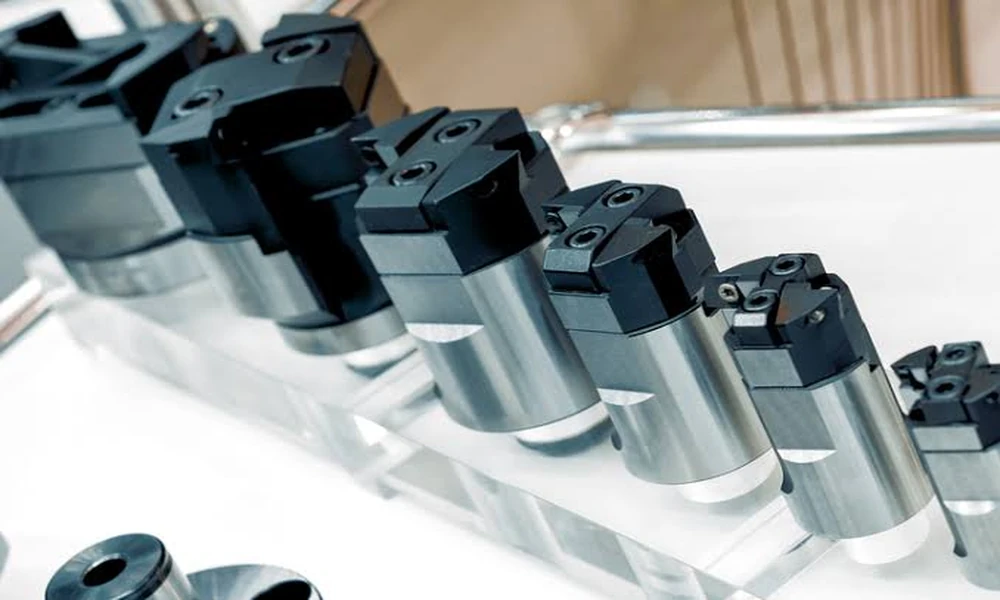
A bracket comes off the mill looking perfect. Every tolerance checks out, the finish is clean, and then during final assembly it quietly fries a component nobody even touched. Nobody notices at the time. The part itself is holding a static charge with nowhere safe to go, which is usually the first sign that whoever specified the material reached for a standard insulator instead of esd plastic.
It’s an easy mistake, and a common one. Most engineering plastics look and machine the same whether they’re static safe or not. The difference only shows up once a charged part meets something sensitive. By then the damage is already done.
When static becomes a defect, not a nuisance
Plastic doesn’t need humid air or a person walking across a carpet to build a charge. Friction from machining, handling, or even normal contact with other surfaces does it. On a standard insulating plastic, that charge just sits there. It sits on the surface until something conductive gets close enough for a sudden discharge.
What dissipative actually means on a spec sheet
Plastics used near sensitive electronics generally fall into three rough categories based on surface resistivity. Insulative materials hold a charge almost indefinitely, with resistivity sitting above roughly 10^12 ohms per square. Conductive materials sit at the opposite extreme, often below 10^5, and they drain a charge almost instantly.
Dissipative materials land in between, typically somewhere around 10^6 to 10^9 ohms per square. That middle ground matters more than it looks. A material that dissipates charge gradually protects a sensitive component in a way a fully conductive one can’t. Instant discharge carries its own risk of damage, oddly enough. Choosing an esd plastic in the dissipative range is often the safer call precisely because it doesn’t rush the process.
| Category | Surface Resistivity | Typical Behavior |
|---|---|---|
| Insulative | Above 10^12 ohms/sq | Holds a static charge indefinitely |
| Dissipative | Roughly 10^6 to 10^9 ohms/sq | Bleeds charge away gradually and safely |
| Conductive | Below 10^5 ohms/sq | Drains charge almost instantly |
Matching resistivity to the process
Not every application wants the same behavior. A tray used to move loose components around a cleanroom might benefit from fast, conductive discharge, since nothing on it gets damaged by a quick drain. A machined housing sitting directly against a populated board is a different story. There, gradual dissipation protects components that a sudden discharge could damage on contact.
Picking “the ESD plastic” isn’t really one decision, then. It’s a match between the resistivity range and what the part actually touches during its working life. Not always an obvious match, either.
Where this shows up on the shop floor
Circuit board fixtures, hard drive components, integrated circuit handling tools, and housings for photovoltaic processing equipment all show up on the list. So do sensor components and printing hardware built for high speed electronic production, where any static event slows the line down or scraps a run outright.
None of these look unusual sitting on a bench. They machine the same as any other engineering plastic and pass the same visual inspection. The difference only becomes obvious once static is actually present. Which is exactly why it needs to be specified up front rather than diagnosed after the fact.
Getting the spec right before the first cut
Static dissipative behavior is a property of the raw stock, not something added afterward. A finished part machined from a standard insulator can’t be converted once it’s cut, coated, or assembled. That makes this one of the few specs where catching a mistake late doesn’t just cost time. It usually means starting over with different material entirely.
Flagging the requirement before the first cut is the only point where it’s actually cheap to fix. Everything after that is a repair. Sometimes an expensive one.


