
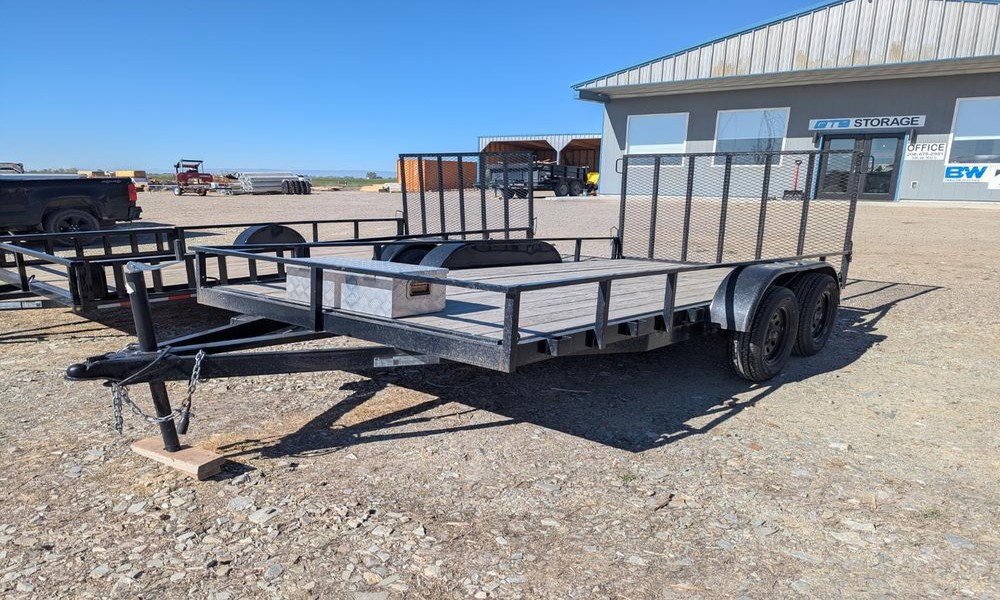
Trailers parked behind the shop or out along a fence line from November through March take more abuse from a Magic Valley winter than most owners realize. Subzero nights in Rupert, lake-effect snow off Bear Lake, road salt picked up on the last haul down I-84, and four months of UV plus moisture cycling all leave their mark. The work to prepare a trailer for cold storage takes a Saturday afternoon. Skipping it costs a season’s worth of repairs the following spring. Customers across Minidoka, Cassia, and Bear Lake counties bring their trailers to Grizzly Trailer Sales every fall for the same reason: the difference between a trailer that’s ready to roll on the first warm day in April and one that needs a parts list before it leaves the yard comes down to a handful of tasks done before the first hard freeze.
Wash the Salt Off Before Anything Else Happens
Idaho doesn’t salt as heavily as states east of the Rockies, but ITD uses a magnesium chloride brine on I-84 and I-86 through the winter, and that brine sticks to trailer frames, axles, and wiring more aggressively than rock salt. A trailer driven home from a job in Boise or Ogden in late October carries chemical residue that will eat at welds and electrical connections all winter if it sits unwashed.
A pressure wash before storage should hit:
- The full underside, especially around axle u-bolts, leaf spring shackles, and the brake backing plates
- Frame crossmembers and any boxed sections where moisture can collect
- Wiring harnesses, the 7-pin plug, and any junction boxes
- Wheel wells and the inside lip of fenders
A coat of fluid film, lanolin spray, or a comparable corrosion inhibitor on the frame and suspension components after the wash extends component life noticeably. The product runs $20 a can and pays for itself the first winter.
Bearings: Repack Now, Not in April
Wheel bearings are the single most overlooked item on stored trailers. Moisture works its way past seals during temperature cycling, the grease emulsifies, and rust pits the bearing races by the time the trailer rolls again. A bearing that fails on the highway under load costs an axle, sometimes a fender, and in a worst case the whole trailer.
A proper bearing service before storage means pulling the hubs, cleaning the old grease out, inspecting the rollers and races for pitting or discoloration, repacking with a quality high-temperature wheel bearing grease, and replacing the seals. On trailers with EZ Lube spindles, pumping new grease in until it pushes the old grease out is better than nothing but doesn’t replace a full repack on a service interval.
For trailers used heavily during the season (more than 12,000 miles or any submersion in water for boat or equipment trailers), annual repacking is the right cadence. For lighter-duty utility and ATV trailers, every other year usually holds up fine.
Tires Lose Pressure in the Cold
Tire pressure drops roughly one PSI for every 10 degree Fahrenheit drop in temperature. A trailer aired up to 65 PSI on a 70 degree October afternoon will read 50 PSI or lower at 10 below in January. Sidewalls flex, the tire flat-spots from sitting in one position, and UV exposure cracks the rubber from the outside in.
The right approach for storage:
- Air to the maximum sidewall pressure listed on the tire, not the truck door placard
- Park on plywood, rubber mats, or proper tire cradles to keep rubber off frozen concrete or gravel
- Cover the tires if the trailer sits in direct sun, since winter UV at 4,200 feet of elevation does real damage
- Move the trailer six inches forward or back every few weeks to rotate the contact patch
Trailer tires age out by date code, not tread depth. Most ST-rated trailer tires need replacement at six to seven years regardless of how they look. The DOT date code on the sidewall (a four-digit number where the last two digits are the year) tells the real story.
Wood Decks and Snow Load
Pressure-treated wood decks on flatbeds, dump trailers, and car haulers handle moisture well but don’t love sitting under three feet of wet snow for months at a time. Snow load on a 16-foot deck at 40 pounds per cubic foot of wet snow adds up to thousands of pounds of static weight, which can warp boards and stress the trailer frame.
Two reasonable options. Park under cover when possible, even a basic carport or pole barn lean-to. If covered storage isn’t available, sweep heavy snow off after each storm rather than letting it accumulate, and apply a coat of penetrating wood sealer before winter to slow water absorption. Cabot, Thompson’s, and similar exterior wood treatments work well for this purpose.
Steel decks and aluminum decks need less attention but still benefit from snow removal to prevent rust starting at scratch points or galvanic corrosion where dissimilar metals meet.
Brakes, Batteries, and Hydraulics
Trailers with electric brakes, electric-over-hydraulic brakes, or 12-volt hydraulic dump systems all carry batteries that hate cold weather. A flooded lead-acid battery that’s only 50 percent charged can freeze solid below 20 degrees Fahrenheit. Once frozen, it’s done.
Pull the battery before storage, top off the charge with a quality charger, and store it in a heated space. A trickle charger or smart maintainer (NOCO Genius and Battery Tender are common choices) keeps the battery healthy through the winter. Reinstall in spring with clean terminals.
For hydraulic dump trailers, cycle the bed up and down a few times before storage to circulate fluid, then store with the bed down to keep cylinder rods retracted and protected from corrosion. A light coat of grease on exposed cylinder rods doesn’t hurt.
Brake magnets benefit from a quick visual inspection before storage. Worn magnets, frayed wiring at the backing plate, or damaged brake assemblies are easier to address now than during a March pre-haul scramble.
Documentation, Locks, and Theft Prevention
Trailer theft picks up in winter when yards are quiet and trailers sit untouched for weeks. A coupler lock, a wheel boot, or a hitch pin lock is cheap insurance. Photograph the VIN plate, document the registration, and store paperwork somewhere accessible. Idaho registration requirements through the ITD remain in effect even on parked trailers, and lapsed registration creates headaches when it’s time to renew.
Spring will arrive faster than the snow suggests, and a trailer that was put away properly is one that hooks up, rolls, and works on the first call of the season. The service team at Grizzly Trailer Sales handles bearing repacks, brake inspections, electrical work, and pre-storage prep at both the Rupert and Montpelier locations. Bring the trailer in before the first hard freeze, and pick it up in April ready to earn its keep again.