

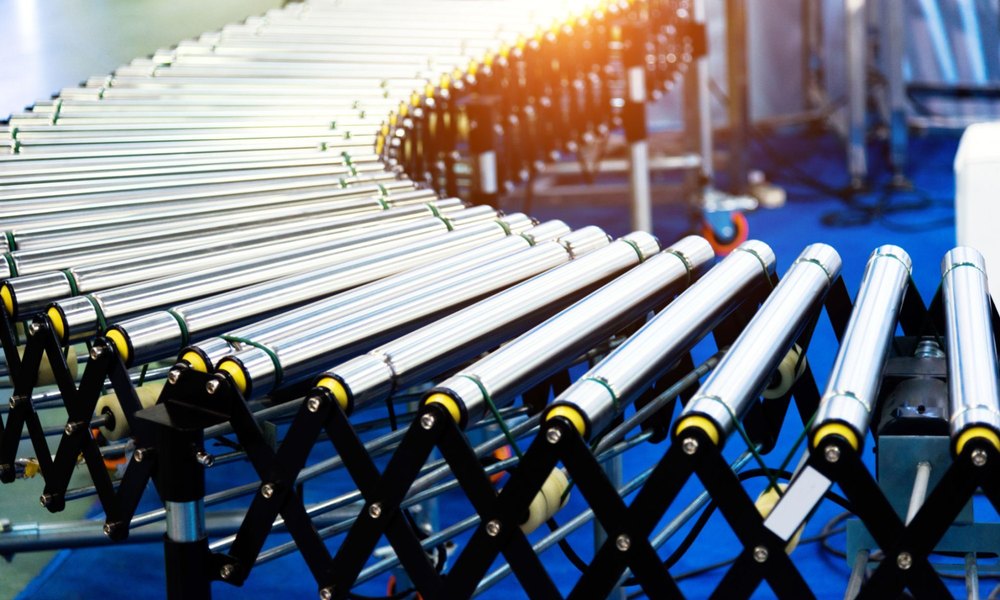
Flexible conveyor systems have become an important asset for ecommerce operations that face rapid changes in order volume and product variety. These systems allow warehouses to adjust layouts quickly, handle fluctuating throughput, and support the fast order cycles that define high growth environments.
Traditional fixed conveyor lines can restrict adaptability. When order profiles shift or storage zones need reconfiguration, rigid layouts require considerable time and capital to modify. Flexible conveyors offer an alternative that supports dynamic adjustments without major structural changes. They can be expanded, contracted, or repositioned as needed, giving warehouse managers greater control over floor planning.
One advantage of flexible conveyors is the way they reduce manual handling. As order volumes grow, reliance on carts or pallet jacks can slow fulfillment and increase error rates. A flexible conveyor line shortens travel distances and moves items more efficiently across packing, sorting, and shipping stations. When paired with systems integration, these conveyors can link with warehouse management software and scanning tools to guide products through every step of the process.
Seasonal peaks present another challenge for ecommerce warehouses. Sudden spikes in order traffic can overwhelm both equipment and labor. A flexible conveyor system helps absorb these surges by allowing quick expansion of processing capacity. Temporary lines can be deployed for high demand periods and removed when volume stabilizes, ensuring that space and resources are used responsibly.
Product diversity in ecommerce can complicate material flow. Items vary widely in size, weight, and packaging, and fixed systems may not accommodate this variety without modification. Flexible conveyors handle a broad range of product types and can be adjusted for different inclines or transfer points. This adaptability allows operations to maintain consistent throughput regardless of shifting product mixes.
Safety is also improved with flexible conveyor solutions. Reducing the need for employees to walk long distances or handle heavy items lowers the risk of strain, collisions, or fatigue-related issues. Modern flexible conveyors often include built-in safety features such as controlled speed settings and stable locking mechanisms that keep equipment secure during heavy use.
Maintenance considerations play a role as well. Flexible conveyors typically have fewer complicated components than fixed systems, which can simplify upkeep. Modules can be removed or swapped with minimal disruption. When supported by predictive maintenance and automated monitoring systems, warehouse managers can track performance trends and schedule service at appropriate intervals.
Scalability is another reason these systems are gaining attention. As ecommerce companies expand into new markets or add product lines, their operational needs change swiftly. Flexible conveyors give managers the ability to scale support functions without investing in costly facility redesigns. This makes them a practical choice for businesses that expect continuous growth.
The speed at which orders are fulfilled is often a key differentiator in ecommerce. Flexible conveyors improve processing times by creating smoother transitions between work zones. They enable steady product flow from receiving to put away and from picking to shipping. Combined with automated labeling, scanning, and sorting tools, these systems help ensure that orders are processed accurately and reach customers quickly.
Cost efficiency is another important factor. While the initial investment in flexible conveyors can vary depending on system size and capabilities, the long-term savings are notable. Reduced labor requirements, lower error rates, and improved floor utilization contribute to stronger operational performance. Instead of investing in new fixed lines each time a layout needs adjusting, managers can reconfigure existing flexible conveyors to support new workflows.
Ecommerce success often depends on responsiveness, and flexible conveyor systems support this goal by providing the adaptability required to meet shifting priorities. They allow warehouses to test new processes, pilot temporary workflows, or shift capacity between zones without major downtime. For operations pursuing continuous improvement, this versatility is valuable.
As ecommerce continues to expand, facilities must handle rising demand while maintaining speed and accuracy. Flexible conveyor systems provide the practical adaptability needed to keep operations moving efficiently. When paired with strong planning, workforce training, and systems integration solutions, these systems help warehouses position themselves for long-term growth in a competitive market.


